Hello, welcome to the official website of Liaoning Huagao New Materials Co., Ltd.


E-mail Box: sales@lnhgxc.com
Blog
Leave a Message/Feedback
If you have any questions, please leave your message, or contact us. Thank you for your support and trust, we will wholeheartedly provide you with high quality products and services!
GuestbookApplications of zirconium wire
Time:
2021-06-14
Zirconium wire boasts excellent thermal conductivity and exhibits minimal thermal expansion and contraction during operation, making it an essential material in the electronics and power equipment manufacturing industries—though it’s also widely utilized across other sectors. Thanks to its remarkable ability to withstand temperatures up to 2,900°C in a vacuum, zirconium wire is currently the most commonly used heat-conducting material in the aerospace industry. So, let’s dive into its diverse applications below!
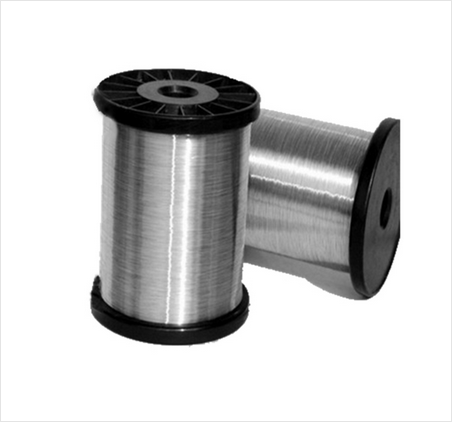
Zirconium wire is a rare metal renowned for its remarkable corrosion resistance, exceptionally high melting point, and superior hardness and strength—properties that make it indispensable in aerospace, defense, nuclear reactor, and nuclear energy applications. The corrosion-resistant, high-temperature titanium components used in "Shenzhou 6," while durable, still fall short of zirconium in terms of corrosion resistance. Titanium melts at around 1600°C, whereas zirconium wire boasts a melting point exceeding 1800°C, and even zirconia—a compound derived from zirconium—can withstand temperatures as high as 2700°C or more. This exceptional thermal stability allows zirconium to excel in applications like flash units for photography, as well as in corrosion-resistant containers and piping systems, particularly for handling aggressive chemicals such as hydrochloric and sulfuric acids. Moreover, zirconium compounds serve as effective cross-linking agents in polymer chemistry, enhancing the durability and performance of various materials. As a widely used product in zirconium alloy applications, zirconium wire and zirconium rods exhibit outstanding corrosion resistance and heat tolerance, coupled with unique chemical compositions and physical properties that set them apart in industrial and scientific fields.
1. Chemical Composition of Zirconium Wire
The chemical composition and room-temperature mechanical properties of zirconium wire are shown in Table 1. Both zirconium wire and its alloys exhibit a rapid decrease in elastic modulus as temperature increases, and their density is lower than that of steel. The table provides average values for longitudinal and transverse properties at room temperature. Yield strength and elongation were measured based on a 0.2% permanent deformation, indicating elastoplastic behavior. Additionally, certain properties are influenced by anisotropy, including thermal expansion, yield strength, ultimate tensile strength, elongation, notch toughness, and bending ductility—each varying to different degrees depending on the direction. Notably, ductility increases significantly with rising temperature.
2. Physical Properties of Zirconium Wire
Low elastic modulus results in lower welding stresses, a higher melting point requiring greater welding energy input, a low coefficient of linear expansion leading to minimal welding deformation, and high thermal conductivity ensuring excellent heat dissipation in welded components. Additionally, a low specific heat means the welded parts absorb less heat, while high surface tension contributes to better wettability during welding processes involving zirconium.
Zirconium wire is a reactive metal with a high affinity for oxygen, which allows it to form a protective oxide layer in air at room temperature. This oxide film imparts exceptional corrosion resistance to zirconium and its alloys. With its outstanding corrosion resistance, zirconium demonstrates remarkable resilience against a wide range of aggressive media, while also offering excellent mechanical properties, superior heat transfer performance, and significant cost advantages—making it an ideal corrosion-resistant structural material widely used in today’s petrochemical industry.
Industrial zirconium wire is widely used in various corrosion-resistant process equipment, primarily in pressure vessels, heat exchangers, pipelines, tanks, shafts, mixers, and other mechanical devices—as well as valves, pumps, sprayers, trays, demisters, and even zirconium rods for the tar industry. Statistically, only a small fraction of zirconium—typically processed into the form of zirconium (or Industrial Grade Zirconium Sponge)—is further refined into zirconium alloys, which are then applied in nuclear fuel components or specialized industrial applications. From the perspectives of processing complexity and advanced scientific technology, the zirconium industry chain stands at the very pinnacle of the materials manufacturing sector.
That concludes our overview of zirconium wire applications. If you'd like to learn more, feel free to reach out to us anytime!
Contact Us
Add: Liucheng Economic Development Zone, Chaoyang County, Chaoyang City, Liaoning Province, China
Tel:0086-416-7996156 Contact: Mrs. Rosa Ma
Mobilephone:0086–18641665591
Main Products: Industrial Grade Zirconium Sponge
Zirconium Tetrachloride Downstream Zirconium Products
E-mail Box: sales@lnhgxc.com rosa@lnhgxc.com
We-Chat: Rosa778899
Scan to learn more
WeChat official account
Copyright: Liaoning Huagao New Materials Co., Ltd. |SEO| Website:300.cn jinzhou.300.cn Privacy Policy