Hello, welcome to the official website of Liaoning Huagao New Materials Co., Ltd.


E-mail Box: sales@lnhgxc.com
Blog
Leave a Message/Feedback
If you have any questions, please leave your message, or contact us. Thank you for your support and trust, we will wholeheartedly provide you with high quality products and services!
GuestbookUses and Application Fields of Zirconium Wire
Time:
2021-06-11
Zirconium wire is easily ignited when burned in air. It serves as a high-quality additive for deoxidizing zirconium-sulfur alloys used in premium steels, and is also a key component in armor steel, heavy artillery-grade steel, stainless steel, and heat-resistant alloys. Let’s explore the uses and application areas of zirconium wire together below!
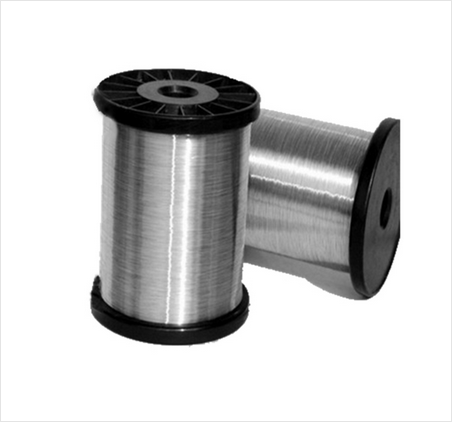
Zirconium wire is an important alloying element in magnesium alloys, enhancing both the tensile strength and machinability of magnesium. Additionally, zirconium wire serves as a grain refiner in aluminum-magnesium alloys, helping to produce finer grains.
Zirconia and zircon are the most valuable compounds used in refractory materials. Zirconia is a key material for advanced ceramics but cannot be used as a heating element resistant to high-temperature oxidation. Instead, zirconia serves as an effective additive in acid-resistant enamels and glass, significantly enhancing the material’s elasticity, chemical stability, and heat resistance. Meanwhile, zircon boasts excellent light-reflection properties and outstanding thermal stability, making it an ideal opacifier for both ceramics and glass applications.
Zirconium wire can absorb large amounts of gases such as oxygen, hydrogen, and ammonia when heated. In vacuum tubes, zirconium powder is used as a getter, while zirconium wire and zirconium sheets serve as ideal getters for applications like sprue supports and anode brackets. When powdered iron is mixed with zirconium nitrate, it produces a brilliant, flash-like powder—most commonly used as the outer cladding material for uranium fuel components in nuclear reactors. Additionally, zirconium is highly resistant to the intense flashes emitted by photographic flash units, as well as to corrosive environments like hydrochloric and sulfuric acids. Moreover, zirconium-based chemicals can act as cross-linking agents in polymers.
From an industrial perspective, adding just one-thousandth of a percent of zirconium to steel can dramatically boost its hardness and strength. Zirconium-containing armor steel, cannon forging steel, stainless steel, and heat-resistant steel are all critical materials used in the production of armored vehicles, tanks, artillery, and weaponry.
From the perspective of atomic and nuclear energy, zirconium stands out for its exceptional atomic properties, making it an indispensable material in the development of the nuclear industry. China's large-scale nuclear power plants widely rely on zirconium-based materials—indeed, when generating nuclear power, a 1-million-kilowatt plant consumes between 20 and 25 tons of zirconium annually. Meanwhile, a single 30,000-horsepower nuclear submarine uses zirconium and zirconium alloys as cladding and pressure tubes for its nuclear fuel, requiring anywhere from 20 to 30 tons of zirconium.
Zirconium wire is a rare metal renowned for its remarkable corrosion resistance, exceptionally high melting point, and superior hardness and strength—properties that make it indispensable in aerospace, defense, nuclear reactor, and nuclear energy applications. The corrosion-resistant titanium components used in "Shenzhou 6," while durable, simply cannot match zirconium's unmatched ability to withstand harsh environments. Titanium boasts a melting point of around 1600°C, whereas zirconium’s melting point exceeds 1800°C, and zirconia—a compound derived from zirconium—can even endure temperatures above 2700°C. No wonder zirconium holds such a prestigious position in the aerospace and space industries!
That concludes our introduction to the uses and application areas of zirconium wire—feel free to reach out to us anytime if you'd like to learn more!
Previous page
Next page
Previous page
Next page
Contact Us
Add: Liucheng Economic Development Zone, Chaoyang County, Chaoyang City, Liaoning Province, China
Tel:0086-416-7996156 Contact: Mrs. Rosa Ma
Mobilephone:0086–18641665591
Main Products: Industrial Grade Zirconium Sponge
Zirconium Tetrachloride Downstream Zirconium Products
E-mail Box: sales@lnhgxc.com rosa@lnhgxc.com
We-Chat: Rosa778899
Scan to learn more
WeChat official account
Copyright: Liaoning Huagao New Materials Co., Ltd. |SEO| Website:300.cn jinzhou.300.cn Privacy Policy