Hello, welcome to the official website of Liaoning Huagao New Materials Co., Ltd.


E-mail Box: sales@lnhgxc.com
Blog
Leave a Message/Feedback
If you have any questions, please leave your message, or contact us. Thank you for your support and trust, we will wholeheartedly provide you with high quality products and services!
GuestbookWhat are the development trends and application areas of zirconium ingot materials?
Time:
2021-06-26
Zirconium ingots are a critical material for the development of nuclear energy, and this document outlines China's progress in zirconium ingot materials and their processing, as well as the technological advancements achieved along the way. The evolution of zirconium ingot technology is closely tied to the growing nuclear power market.
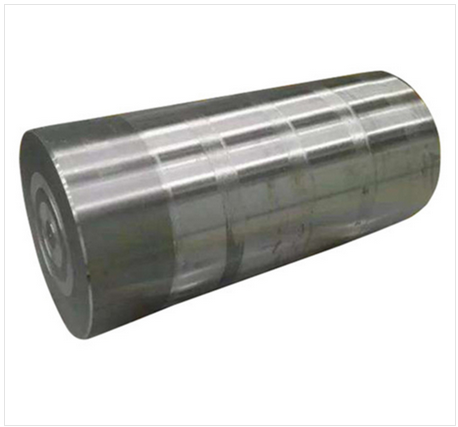
In the coming century, nuclear power will continue to be a major growth trend both domestically and internationally. Once China establishes a world-class, specialized zirconium ingot production facility, it will not only meet domestic demand for zirconium materials but also gain a competitive edge in the global market. Zirconium ingots are a unique industrial commodity. Therefore, the country should implement complementary policies—driven by market needs—while ensuring unified planning and management to foster sustainable development and strengthen its ability to compete on the international stage.
Applications and fields of use for zirconium ingots:
Zirconium ingots can be used as additives for deoxidizing and desulfurizing high-quality steel. They also serve as a key component in armor steels, stainless steels, and heat-resistant steels. Zirconia ingots and zirconium ingot stone are among the most valuable compounds used in refractory materials. Zirconia ingots serve as the primary raw material for advanced ceramics but are not suitable for use as high-temperature oxidation-resistant heating elements. Instead, they can be employed as additives in acid-resistant enamels and glass, significantly enhancing the material’s elasticity, chemical stability, and thermal resistance. Zirconium ingot stone, with its exceptional light reflectivity and outstanding thermal stability, is ideal as an opacifier in ceramics and glass applications. Moreover, zirconium ingots exhibit remarkable gas-absorbing properties, capable of capturing large amounts of oxygen, hydrogen, ammonia, and other gases when heated—making them an excellent choice as getters. For instance, zirconium ingot powder is commonly used in electron tubes as a degassing agent, while zirconium ingot wires and sheets are utilized as support structures for both gate electrodes and anode mounts. A mixture of iron powder with zirconium nitrate ingots produces flash powder, widely used in pyrotechnic applications. In nuclear reactors, zirconium ingots are almost exclusively employed as cladding materials for uranium fuel elements. Beyond this, they also find applications in photography flash units, as well as in the manufacture of corrosion-resistant containers and piping systems—particularly for handling aggressive chemicals like hydrochloric and sulfuric acids. Additionally, zirconium-based chemicals are increasingly being explored as cross-linking agents in polymer production.
From a military-industrial perspective, adding just one-thousandth of a zirconium ingot to steel can dramatically enhance its hardness and strength. Zirconium-containing armor steels, gun-forging steels, stainless steels, and heat-resistant steels are critical materials used in the manufacturing of armored vehicles, tanks, and artillery systems.
From the perspective of atomic and nuclear energy, zirconium ingots exhibit exceptional nuclear properties, making them an indispensable material for advancing the atomic energy industry. Zirconium ingots are widely used in China's large-scale nuclear power plants. When generating electricity via nuclear power, these plants consume between 20 and 25 tons of zirconium ingots annually per million kilowatts of capacity. Meanwhile, a 30,000-horsepower ship or a nuclear submarine relies on zirconium ingots and zirconium alloy materials for fuel cladding and pressure piping systems, with consumption levels reaching 20 to 30 tons of zirconium ingots.
Zirconium ingots are a rare metal renowned for their remarkable corrosion resistance, high melting point, exceptional hardness, and strength. They are widely used in industries such as aerospace, defense, nuclear reactors, and atomic energy.
Contact Us
Add: Liucheng Economic Development Zone, Chaoyang County, Chaoyang City, Liaoning Province, China
Tel:0086-416-7996156 Contact: Mrs. Rosa Ma
Mobilephone:0086–18641665591
Main Products: Industrial Grade Zirconium Sponge
Zirconium Tetrachloride Downstream Zirconium Products
E-mail Box: sales@lnhgxc.com rosa@lnhgxc.com
We-Chat: Rosa778899
Scan to learn more
WeChat official account
Copyright: Liaoning Huagao New Materials Co., Ltd. |SEO| Website:300.cn jinzhou.300.cn Privacy Policy