Hello, welcome to the official website of Liaoning Huagao New Materials Co., Ltd.


E-mail Box: sales@lnhgxc.com
Blog
Leave a Message/Feedback
If you have any questions, please leave your message, or contact us. Thank you for your support and trust, we will wholeheartedly provide you with high quality products and services!
GuestbookPreparation Method and Process of Zirconium Tetrachloride
Time:
2021-06-23
Zirconia boasts chemically inert properties, along with exceptional characteristics such as a high melting point, high resistivity, high refractive index, and low thermal expansion coefficient. It is a crucial raw material for producing high-temperature-resistant materials, ceramic insulators, ceramic opacifiers, and synthetic drill bits. Now, let’s dive into the preparation methods and process of zirconium tetrachloride!
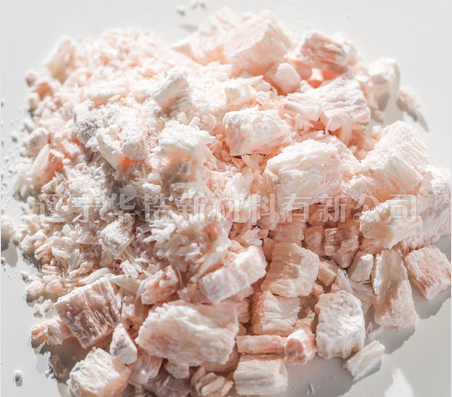
Zirconium Tetrachloride is a crucial raw material for producing zirconia. Currently, zirconia production technologies are broadly categorized into two main methods: the alkali-solvent method and the chlorination method. Among these, the fluidized-bed chlorination process stands out as the most promising technology for Zirconium Tetrachloride production, offering advantages such as high product quality, low production costs, and excellent raw-material utilization. In this chlorination process, zircon sand, a reducing agent (such as charcoal, petroleum coke, or coal powder), and chemical heat supplements (including silicon powder, ferrosilicon, or silicon carbide) are mixed and reacted within a fluidized-bed reactor to produce Zirconium Tetrachloride, while simultaneously generating byproduct silicon tetrachloride.
Previously, the method of producing zirconium tetrachloride using a fluidized bed required high-carbonization and chlorination conditions for zircon sand—specifically, reaction temperatures had to reach 1100–1300°C for the process to proceed. However, in industrial-scale manufacturing, achieving these demanding reaction conditions typically involves using induction heating to warm the chlorination reactor. Yet, induction heating places stringent requirements on the material of the heating elements inside the reactor: for instance, the heating elements must be made of conductive materials capable of withstanding temperatures exceeding 1500°C—and they must also endure chlorine-induced corrosion at such extreme heat levels. These challenges have significantly complicated the industrial-scale production of zirconium tetrachloride via the fluidized-bed chlorination process.
The technical challenge this invention aims to address is that, in light of the shortcomings inherent in existing technologies, current boiling chlorination methods for manufacturing zirconium tetrachloride suffer from issues such as high system reaction temperatures and severe corrosivity, which in turn lead to significant difficulties in equipment fabrication and challenges for industrial implementation.
To address the technical challenge of the present invention, the approach taken is to provide a method for manufacturing zirconium tetrachloride that includes the following steps:
In the reactor, hydrogen gas is ignited using excess chlorine. The hydrogen burns in the chlorine, triggering a reaction that produces other chemical substances—this exothermic reaction causes the temperature inside the reactor to rise. Meanwhile, silicon powder inside the chlorine reactor reacts to form silicon tetrachloride and hydrogen gas, and again, the heat released by this reaction increases the reactor's internal temperature.
Chlorine reacts with zircon sand and a carbon-based reducing agent inside the reactor to produce zirconium tetrachloride and silicon tetrachloride. The above-described implementation is an exemplary approach used to illustrate the principle of the present invention, but it should be understood that the invention is not limited to this specific method. Those skilled in the art can make various modifications and improvements without departing from the spirit and essence of the invention, and such modifications and enhancements are also considered within the scope of protection of this invention.
The above outlines the preparation method and process for Zirconium Tetrachloride. If you'd like to learn more, feel free to contact us anytime!
Contact Us
Add: Liucheng Economic Development Zone, Chaoyang County, Chaoyang City, Liaoning Province, China
Tel:0086-416-7996156 Contact: Mrs. Rosa Ma
Mobilephone:0086–18641665591
Main Products: Industrial Grade Zirconium Sponge
Zirconium Tetrachloride Downstream Zirconium Products
E-mail Box: sales@lnhgxc.com rosa@lnhgxc.com
We-Chat: Rosa778899
Scan to learn more
WeChat official account
Copyright: Liaoning Huagao New Materials Co., Ltd. |SEO| Website:300.cn jinzhou.300.cn Privacy Policy